Hut 8 AI Data Center Deal Proves Mining Isn't Enough
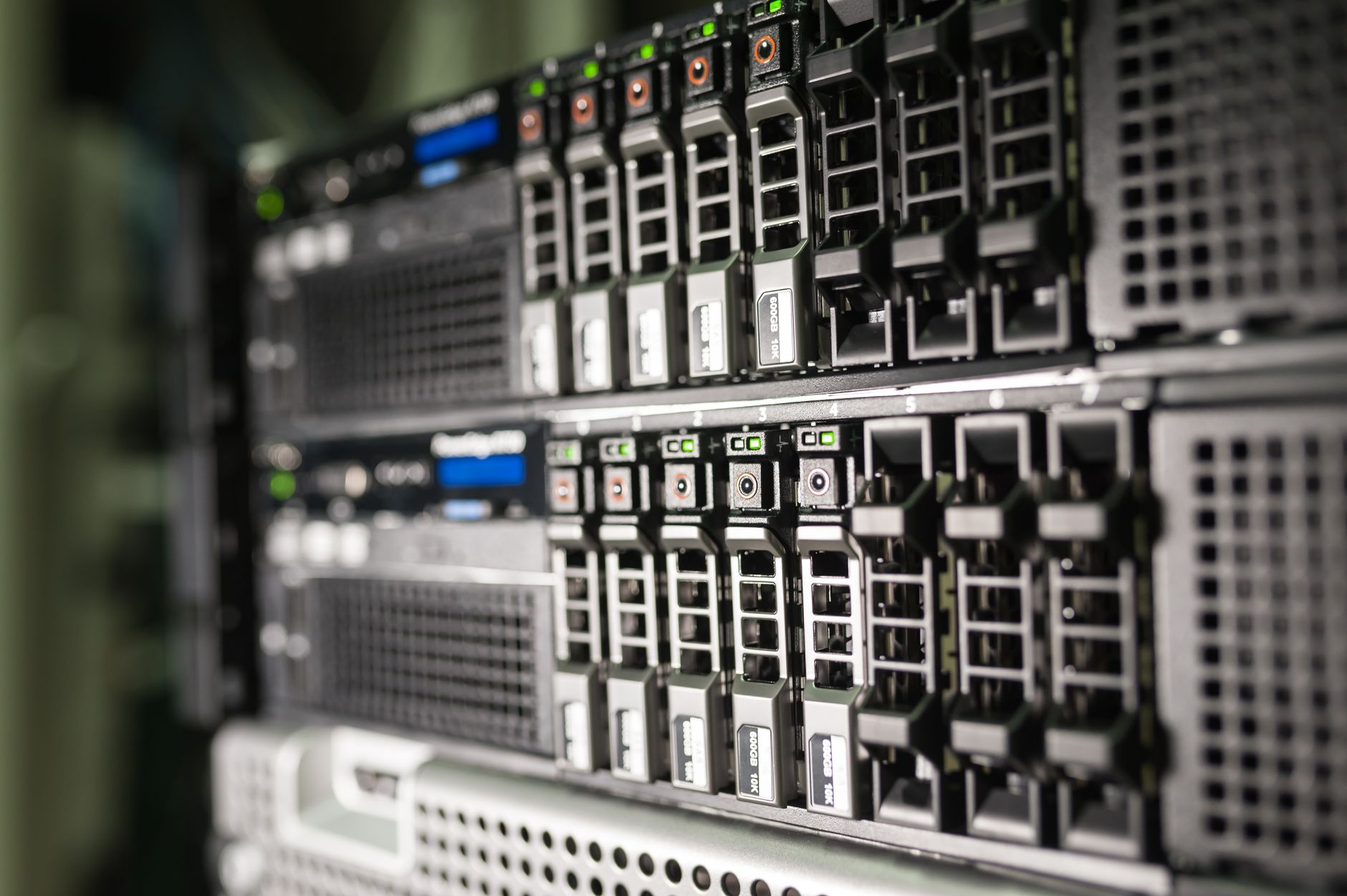
Hut 8's $9.8B AI data center lease signals Bitcoin miners' most profitable path may be GPU hosting. How to evaluate which mining stocks are credible AI pivots.
The Hut 8 AI Data Center Deal Changes the Math for Every Mining Stock
There's a moment in every industry's life cycle when the smartest operator in the room stops doing the thing that made them famous. For publicly traded Bitcoin miners, that moment arrived this week. The Hut 8 AI data center deal — a $9.8 billion lease that fully commercializes the company's Texas campus for AI workloads — isn't just a big number. It's a confession. The most capital-efficient thing you can do with racks of power-hungry hardware in a Texas warehouse is no longer mining Bitcoin.
Let that sit for a second. A company that built its identity on proof-of-work just signed the largest single AI-infrastructure contract ever executed by a former pure-play crypto miner. And it did so the same week chipmakers are hovering near bear-market territory and Big Tech is previewing capex budgets that would make a small country blush.
If you own mining stocks, you need to re-underwrite the thesis. Not next quarter. Now.
Is Hut 8 Still a Bitcoin Mining Stock or an AI Infrastructure Play?
The honest answer: it's both, but the center of gravity has shifted so dramatically that calling Hut 8 a "Bitcoin miner" feels like calling Amazon a bookstore. The $9.8 billion lease doesn't eliminate Hut 8's mining operations, but it redefines what drives the stock.
Consider the revenue profile. Bitcoin mining revenue is hostage to two variables you can't control: BTC price and network hash rate. Every time a new generation of ASICs ships, the difficulty adjustment tightens. You're running faster just to stay in place. AI hosting revenue, by contrast, locks in contractual cash flows over multi-year terms. The tenant pays for power, cooling and rack space at rates that make mining margins look thin.
Hut 8 management has been telegraphing this shift for over a year. The Texas campus buildout was always oversized for mining alone. What changed is the velocity of demand. Hyperscalers and neocloud providers are so desperate for power-ready sites that they'll sign decade-long leases at premium rates. If you've been watching the neocloud stocks rebound analysis, you've seen how this demand is rippling through the entire data center stack.
Hut 8 didn't pivot away from crypto. The economics pivoted for them.
How Does GPU Hosting Revenue Compare to Bitcoin Mining Revenue?
This is where the napkin math gets uncomfortable for mining purists.
At current hash rates and post-halving block rewards, a megawatt of mining capacity generates roughly $150–$200 per day in gross revenue, before electricity. That number compresses every time difficulty adjusts upward. GPU hosting for AI inference and training? Industry estimates put gross revenue per megawatt north of $400–$600 per day, with contracted escalators built in.
The margin story is even starker. Mining margins swing violently with BTC price. A 20% drawdown in Bitcoin can flip a profitable mine into a cash incinerator overnight. GPU hosting vs Bitcoin mining profitability isn't even close in risk-adjusted terms. The hosting contracts provide revenue visibility that miners have never had.
That doesn't mean mining is dead. It means mining alone is no longer a sufficient business model for a publicly traded company trying to attract institutional capital. The Hut 8 $9.8 billion lease is proof that the market will pay a premium for predictable infrastructure revenue layered on top of crypto optionality.
Which Bitcoin Miners Are Pivoting to AI Data Centers?
Hut 8 is the furthest along, but they're not alone. The Bitcoin miner AI infrastructure stocks to watch form a spectrum from genuine operators to narrative tourists.
On the credible end: IREN (formerly Iris Energy) has been building out GPU cloud capacity and actually booking AI revenue. Core Scientific restructured around an HPC hosting strategy and signed its own hyperscaler deals. These companies have the three things that matter: permitted power, cooling infrastructure and fiber connectivity.
Then there's the middle tier. Companies like Marathon Digital and Riot Platforms have talked about AI diversification, but their capital allocation still skews heavily toward hash rate expansion. Words are cheap. Follow the capex.
And at the bottom, you'll find micro-cap miners slapping "AI" into press releases without a single signed hosting contract. These are narrative trades, not infrastructure pivots. If you want to separate signal from noise, screen mining stocks with Traderise and filter for companies that actually report hosting revenue as a line item, not a footnote.
The framework is simple. Ask three questions: Does the company have contracted AI hosting revenue? Is capex shifting from ASICs to GPUs and cooling? And does site power capacity exceed what mining alone requires? Two out of three gets your attention. All three deserves a harder look.
What Does Hut 8's $9.8 Billion AI Lease Mean for the Stock?
The valuation case just changed category. Mining stocks have historically traded on a blended multiple: part commodity producer, part tech proxy, part Bitcoin leverage. The $9.8 billion lease pushes Hut 8 toward data center REIT comps, which trade at significantly higher multiples to revenue.
Infrastructure REITs like Equinix and Digital Realty trade at 10–12x forward revenue. Pure-play miners? Often 2–4x, when the market is being generous. If even a portion of Hut 8's revenue mix shifts to contracted AI hosting, the re-rating potential is substantial. Wall Street analysts were already revising models before the ink dried.
But execution risk is real, and it matters. Building out data center capacity to hyperscaler spec is not the same as plugging in mining rigs. The cooling requirements for GPU clusters are more demanding. The uptime SLAs are unforgiving. Hut 8 needs to prove it can operate at enterprise grade, not just crypto grade.
The stock has already moved on the announcement. Chasing the initial spike rarely ends well. The more telling signal will be the first quarterly earnings that show AI hosting revenue hitting the P&L. That's when the re-rating moves from speculative to structural.
The Bigger Picture
Zoom out for a second. This week's market tape reads like a transition story across multiple sectors. A major car dealer is shuttering 40% of its locations. The S&P 500 is flashing valuation signals not seen since the dot-com era. Goldman Sachs is telling clients scared of the AI trade to look at adjacent themes. The common thread is adaptation, or the failure to adapt.
The Bitcoin miners' AI pivot is one chapter in that larger story. TSMC's capex raise confirms AI chip demand isn't slowing, even as semiconductor stocks wobble. The companies that own the physical infrastructure — power, cooling, land — are becoming the picks-and-shovels play for the next wave of AI buildout.
Hut 8 just made the boldest bet in the sector. Whether it pays off depends on execution, not narrative. For anyone holding mining stocks, the question isn't whether the AI pivot is real. It is. The question is whether the company in your portfolio is actually making the transition, or just talking about it.
Read the capex tables. Follow the contracts. Ignore the press releases.