ON Semiconductor in 2026: The Trade AI Forgot
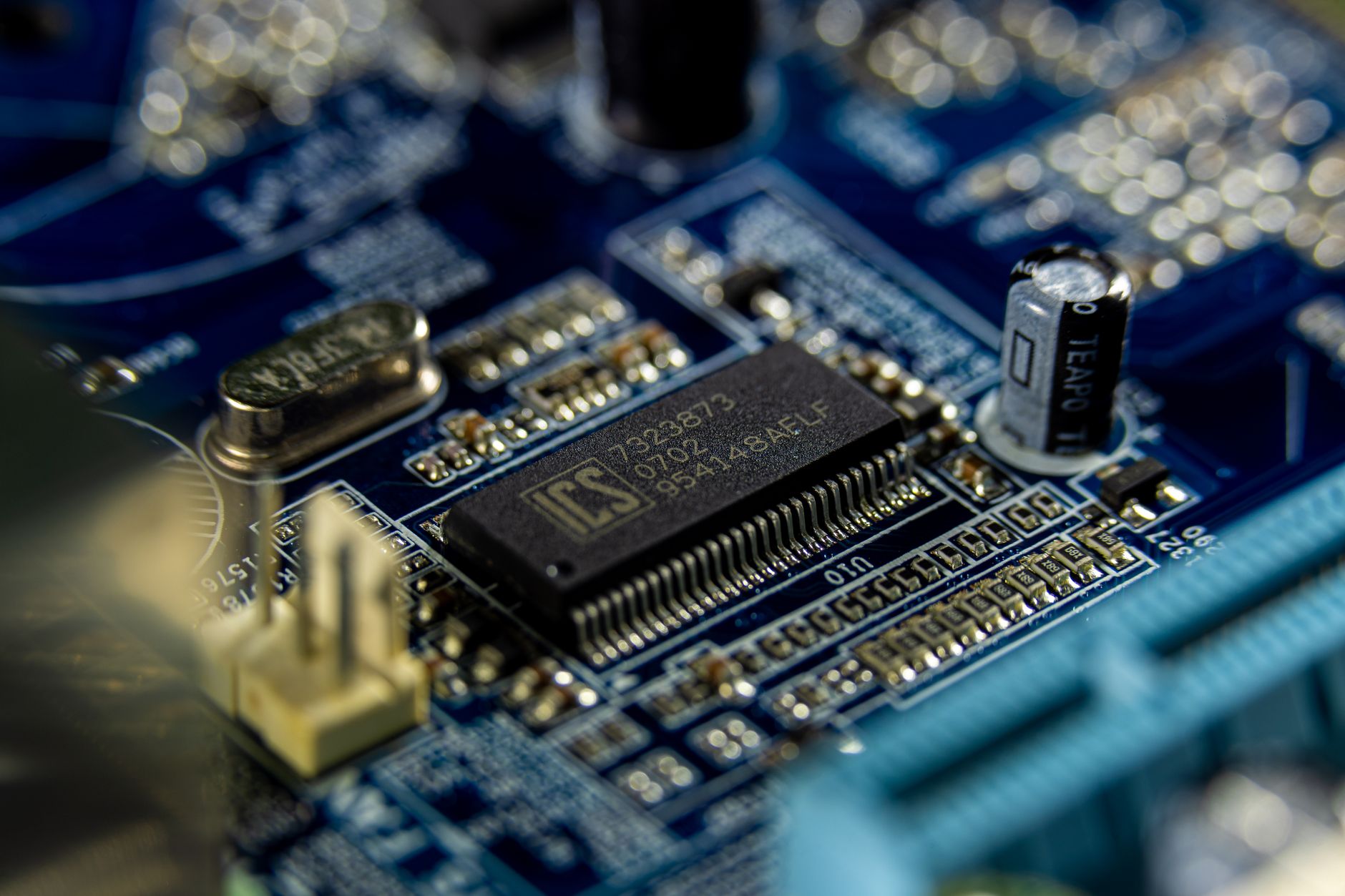
ON Semi is lagging AMD and Broadcom in 2026 — but the SiC power-management angle for AI data centers may be the underpriced catalyst traders are missing.
ON Semiconductor stock 2026 is quietly becoming one of the cleaner divergence setups in semiconductors. While AMD, Broadcom, and Qualcomm have ridden the AI capex wave to fresh highs, ON has drifted — down roughly 20% against the Nasdaq on a year-to-date basis. The spread is real. The question is whether it signals structural damage or a temporary repricing.
Short answer: repricing.
Why ON Semiconductor Stock 2026 Is Lagging AMD and Broadcom
The market has a simple heuristic right now: AI equals buy. If you can draw a straight line from your product to an H100 rack or a GB200 cluster, institutions are paying up. AMD gets multiple expansion for MI300X traction. AMD's institutional options flow has already diverged cleanly from the broader market selloff, which tells you where the positioning is. Broadcom trades at a premium because hyperscalers are writing billion-dollar checks for custom ASICs.
ON doesn't fit that narrative cleanly. Revenue splits roughly 45% automotive, 30% industrial, and the rest across other end markets. EV demand cooled through 2025 and hasn't fully snapped back. Industrial automation spending has been choppy at best. So the sell-side rerated the stock as a cyclical auto and industrial name — and nobody has bothered to revisit.
That's the mispricing.
Does ON Semi Benefit from AI Data Center Power Demand?
Yes. The market just hasn't connected the dots.
AI data centers are power-density problems wearing a compute hat. A single H100 rack pulls 10–20kW. Next-generation GPU clusters are pushing toward 100kW per rack and beyond. The bottleneck in scaling these facilities isn't GPU supply — it's the power conversion and delivery infrastructure sitting upstream. You need efficient, high-frequency switching regulators, intelligent power modules, and high-voltage conversion technology that can handle those loads without thermal runaway.
ON's silicon carbide MOSFETs and intelligent power modules sit directly in that conversion chain. TSMC's August revenue record confirmed AI capex is accelerating, not plateauing — more fab throughput means downstream demand for power management ICs rises in lockstep, not just logic chips.
The narrative hasn't caught up. "Power management chips AI data center" isn't in the headlines yet. When it gets there, ON's current multiple looks cheap relative to where it should trade.
Is Silicon Carbide the Next AI Infrastructure Play?
SiC semiconductor stocks have been a frustrating trade for two years. The original thesis was straightforward: EV adoption forcing a design-win cycle at every major automaker. That played out slower than expected. Wolfspeed had supply-chain issues that bled sentiment across the whole category. The sector got lumped together and sold.
But SiC has two addressable markets, not one. Automotive is the loud story. Power infrastructure — including the conversion systems feeding AI data centers and grid-scale storage — is the quiet one.
ON has confirmed design wins with multiple Tier-1 automotive customers on 800V EV platforms. Those contracts don't evaporate because one quarter of EV demand disappointed. They're sticky, and the design-win-to-revenue cycle runs 18–24 months. That pipeline is building while the stock drifts sideways.
Semiconductor sector rotation in 2026 is visible in the factor data. Auto semiconductor stocks are sitting at steep discounts to AI-focused peers on a price-to-sales basis. Run a live semiconductor screen on Traderise and ON shows up well below its five-year average relative valuation against the group. That kind of discount doesn't persist indefinitely.
What Is a Bull Call Spread and How Do I Use It on ONsemi?
A bull call spread is a defined-risk options structure. Buy a call at a lower strike, sell a call at a higher strike, same expiration. The sold call caps your upside but cuts your cost basis significantly. If the stock goes nowhere or falls, you lose the net premium paid — nothing more.
For an ONsemi options strategy, the structure makes sense precisely because the timing is uncertain. You have conviction the stock catches up to AI-focused peers, but you don't know if the catalyst arrives this quarter or two quarters out. A naked long call is expensive, and theta decay punishes you while you wait. A spread reduces that cost.
Illustrative structure, for educational purposes only: January 2027 expiry, buy the $65 call, sell the $80 call. If ON is above $80 at expiry, you collect the full $15 spread width. Below $65, you're out the net debit — nothing more. Break-even sits somewhere between those strikes depending on what you paid. The defined-risk profile matters when you're trading a catch-up thesis with an uncertain calendar attached to it.
Size the position so the maximum loss is a number you can fully absorb before you place the trade. That's the discipline, not the strike selection.
The Catalyst Window
Two near-term triggers are worth tracking. First, the automotive SiC design-win cycle: major 800V EV platforms ramping in late 2026 and into 2027 need ON's power modules. Any incremental design-win announcement moves the stock, and pipeline disclosures are due.
Second, hyperscaler power-density contracts. If a major cloud provider names ON as a power-management supplier in an earnings call or a procurement filing, the re-rating happens fast. The market has been slow to connect SiC to data center power infrastructure. Once that connection is made explicit, the multiple gap narrows quickly.
The broader semiconductor buildout will eventually need to reprice the power delivery layer, not just the compute layer. ON sits directly in that path.
Right now the market is chasing the obvious AI names. The screens are full of momentum trades. ON looks dead by comparison.
Sometimes the best setups are the ones where nobody's watching.